Specify capacity, travel, lead, speed, orientation, and mounting. Choose translating vs traveling-nut, keyed/anti-backlash, end fittings, and optional limit switches/feedback. We cross multiple brands and return best-fit systems with lead times.
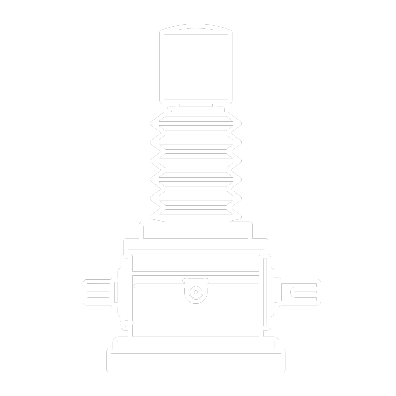
Screw jacks are mechanical actuators that convert rotary motion into linear motion—ideal for lifting, lowering, pushing, pulling, or precisely positioning heavy loads. Rugged and reliable, they are found in applications ranging from aerospace assembly fixtures to industrial automation lines, medical tables, and steel mills.
At AutoMotion Dynamics, we help engineers and OEMs specify the right jack system for their application—whether you need a single jack or a synchronized system of multiple lifting points.
Overview: These jacks use a threaded screw driven directly by a worm gear. Movement is achieved by turning the worm shaft, which slowly raises or lowers the load.
Best Applications: Static or intermittent load positioning; environments where precise control is more important than speed.
Key Benefits:
High load capacity and mechanical advantage.
Self-locking (won’t back drive under load).
Ideal for vertical lifting applications.
Considerations:
Slower operation speeds.
Not suitable for high-duty cycles or rapid actuation.
2. Ball Screw Jacks
Overview: Ball screw jacks use recirculating ball bearings between the screw and nut, dramatically reducing friction and improving speed.
Best Applications: High-duty-cycle systems, dynamic loads, or applications requiring faster travel speeds and efficiency.
Key Benefits:
Higher efficiency (up to 90%).
Faster linear speed and reduced motor torque required.
Ideal for automated or repetitive motion systems.
Considerations:
Typically not self-locking (may require a brake).
More sensitive to contamination; often requires protection.
3. Bevel Gear Screw Jacks
Overview: Bevel gear jacks use bevel gearing instead of worm gear drives. This allows for higher speed, better efficiency, and higher duty cycles.
Best Applications: Multi-jack systems requiring synchronization and faster movement.
Key Benefits:
More compact design at higher torque output.
Can be backdriven if needed.
Low backlash options available.
Considerations:
Requires braking if self-locking is needed.
Slightly higher cost than worm gear jacks.
4. Translating vs. Rotating Screw Designs
Translating Screw: The lifting screw moves linearly while the nut remains fixed. Most common configuration.
Rotating Screw: The screw rotates but remains axially fixed; the load is moved by a traveling nut. Useful in limited-space applications.
Selecting the Right Screw Jack System
Important Specifications:
To size and specify a screw jack correctly, consider the following:
Load Capacity: What is the maximum static and dynamic load? Include safety factors.
Travel Distance: How far does the load need to move?
Speed Requirements: How fast must the jack move? Ball screws and bevel gearboxes improve speed.
Duty Cycle: Is the application intermittent or continuous?
Mounting Orientation: Vertical or horizontal mounting affects load and lubrication needs.
Self-Locking Needs: Does the load need to stay in place without power? Machine screw jacks are best.
Synchronization: Will this be part of a multi-jack system? Consider couplings and shafting arrangements.
Environment: Are there contaminants like dust, heat, or moisture? Protective boots and stainless-steel options available.
Applications of Screw Jacks
Screw jacks are used across industries, including:
Aerospace tooling for wing or fuselage positioning
Stage or platform lifts for events and media
Medical tables and MRI systems
Steel processing lines for guide rollers or height adjustment
Packaging systems for tool changeovers and format adjustments
Solar tracking arrays for adjusting panel orientation
Why AutoMotion Dynamics
As a distributor and technical sales partner, AutoMotion Dynamics can source the correct screw jack system and assist with sizing, CAD models, accessory selection (e.g., limit switches, handwheels, bellows), and drive components (motors, couplings, gearboxes).
We support both standard catalog units and engineered custom solutions.