

Piezoelectric Motors
Piezoelectric motors are precision motion devices that leverage the unique properties of piezoelectric materials to convert electrical energy into precise mechanical motion. Unlike traditional electromagnetic motors, piezo motors have no rotating coils or magnets—instead, they use the expansion and contraction of piezoelectric ceramics to create movement. These motors are ideal for applications where precision, compact form factor, and low noise are critical, such as semiconductor manufacturing, life sciences, photonics, and high-resolution positioning systems.
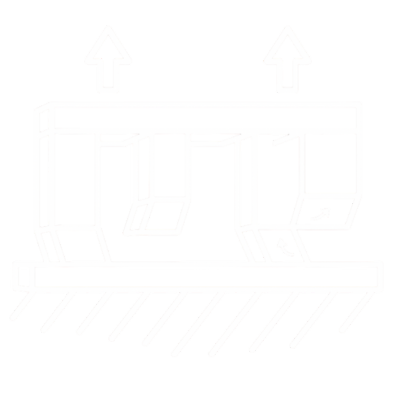
Types of Piezoelectric Motors
- Inchworm (Walking) Motors
Inchworm motors use a sequential clamping and extension mechanism to “walk” a shaft or slider forward. Typically driven by multiple piezo actuators, they provide high resolution and high force over a long travel range. They are often used in applications requiring stable holding force without continuous power. - Ultrasonic Motors
Ultrasonic piezo motors operate by inducing resonant vibrations in a stator, which then drives the rotor through frictional contact. These motors are known for their silent operation and fast response times. They are commonly used in camera lenses, medical devices, and other systems requiring smooth, continuous rotary or linear motion. - Stick-Slip (Step) Motors
Stick-slip motors operate by rapidly switching between a high-friction (stick) phase and a low-friction (slip) phase to produce motion. While simple in construction, they offer high resolution in compact spaces and are ideal for nanometer positioning tasks. - Shear and Bending Actuator Motors
These motors generate displacement by shearing or bending piezoelectric elements. They are often customized for niche applications where traditional actuation geometries do not fit.
Design Criteria for Piezo Motor Integration
When designing with piezoelectric motors, engineers should consider the following:
- Travel Range: Piezo motors excel in short-stroke, high-resolution applications. Some, like inchworm motors, extend usable range.
- Resolution and Repeatability: Piezo motors can achieve sub-nanometer resolution. Closed-loop feedback (with encoders) enhances repeatability and accuracy.
- Holding Force: Many piezo motors offer high holding force without power, ideal for positioning applications.
- Control Electronics: Specialized drivers are required to handle the fast voltage changes and control waveforms.
- Environmental Factors: Consider vacuum compatibility, temperature sensitivity, and magnetic interference.
Achieving Success with Piezoelectric Motors
To successfully integrate and operate piezoelectric motors, engineers should understand a few key performance factors:
- Use of Encoders: Closed-loop systems with high-resolution encoders (optical, capacitive, or magnetic) are crucial for repeatable motion and positioning feedback.
- Physics of Operation: Piezoelectric ceramics change shape when voltage is applied. This deformation—though minuscule—is precisely controlled and amplified through mechanical design to generate motion. Unlike traditional motors, there’s no rotating mass, resulting in nearly instantaneous response.
- Repeatability and Stability: Piezo motors provide exceptional repeatability and thermal stability. With no electromagnetic fields or backlash, they maintain accuracy over long durations.
- Drive Requirements: Piezo devices require high-voltage, low-current drive signals. Some applications may require special waveform shaping or synchronized drive timing.
- Mounting and Preload: Proper mechanical integration is critical. Preload must be correctly applied to ensure consistent contact and frictional forces.
Conclusion
Piezoelectric motors represent a class of high-performance actuators that enable motion in areas where traditional motors fall short. Whether for their ultra-fine positioning, high force density, or non-magnetic operation, piezo motors open new possibilities in automation and precision engineering. AutoMotion Dynamics is experienced in helping customers design and integrate these systems into complex machines—reach out to explore how piezo motion might benefit your application.